
Begusarai in Bihar, India, was identified as the most polluted city in the world in 2023, with an average PM2.5 level of 118.9 micrograms per cubic meter. Guwahati followed closely with an average PM2.5 level of 105.4.
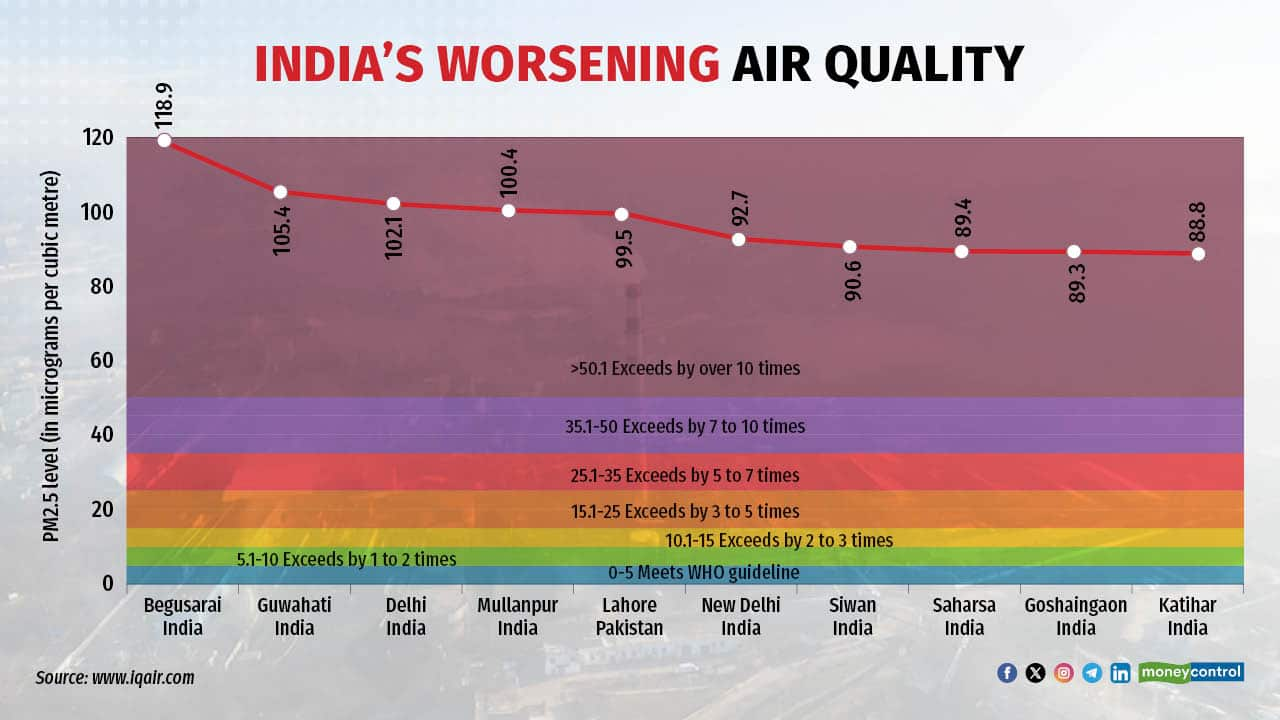
Delhi, the capital city of India, registered an average PM2.5 level of 77.4, ranking it as the most polluted capital city globally. In 2023, India had nine of the top 10 most polluted cities in the world.
The World Air Quality Report by the Swiss organization IQAir revealed that air quality in India worsened in 2023 compared to the previous year, leading to India being ranked as the third most polluted country out of 134 countries.
Bangladesh was labeled as the most polluted country, with Pakistan ranking second in the report.
The report highlighted the severe health impacts of PM2.5 pollution, which is linked to increased rates of heart attack, stroke, oxidative stress, and various illnesses, including impacts on brain development, especially in young children.
The World Health Organization tightened its recommended guidelines for PM2.5 from an average of 10 micrograms per cubic meter to 5 micrograms per cubic meter, emphasizing the severity of the issue.
The report found that only a small percentage of countries and cities globally had air quality that met the WHO guidelines for harmful fine-particle pollution, with regions like the Middle East, Africa, and Central and South Asia being particularly affected.