
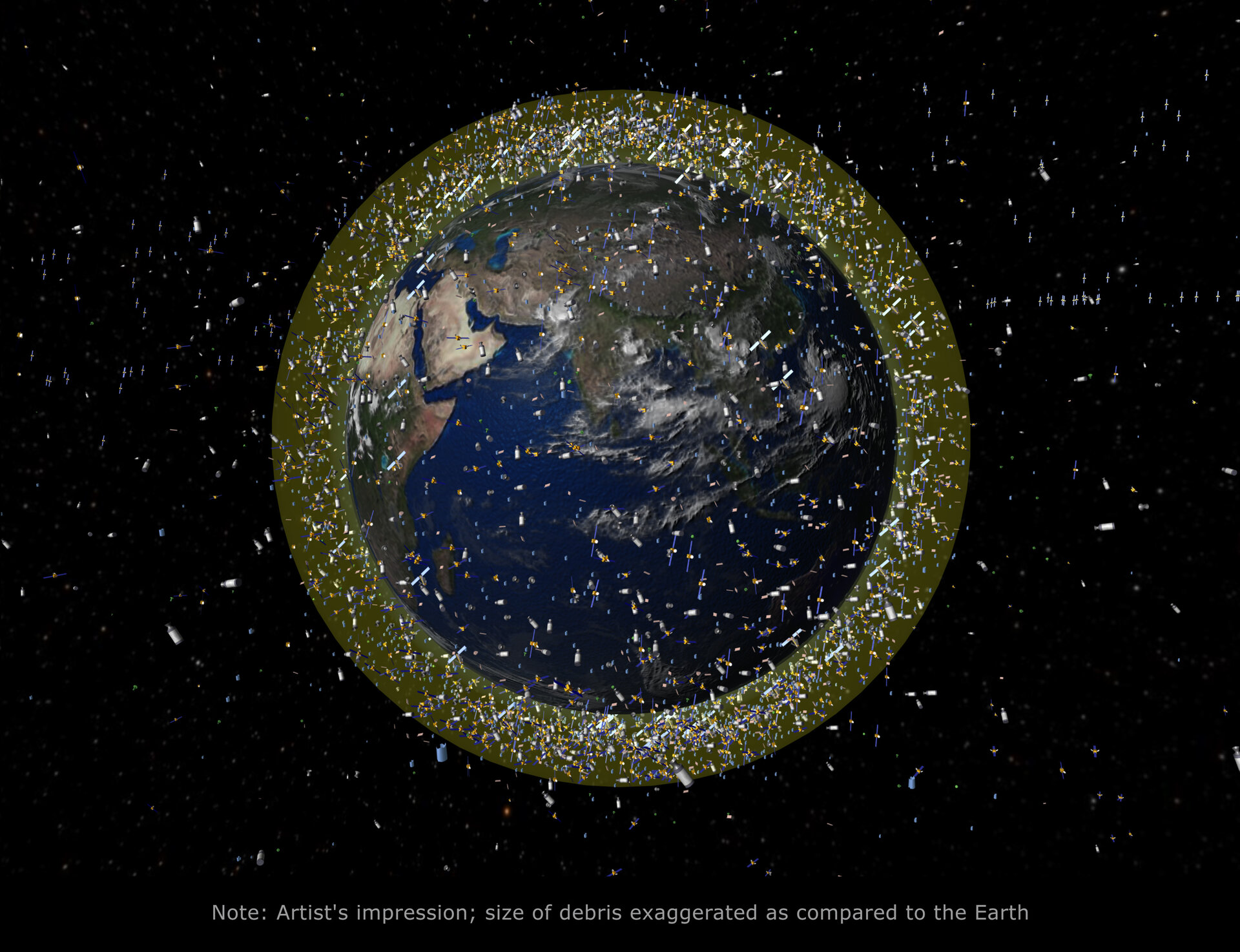
Kessler Syndrome: Proposed by NASA scientist Donald J. Kessler in 1978, the Kessler Syndrome (also known as the Kessler effect, collisional cascading, or ablation cascade) is a theoretical scenario in which the density of objects in low Earth orbit (LEO) due to space pollution becomes so high that collisions between these objects trigger a cascade effect. Each collision generates additional space debris, increasing the likelihood of further collisions. The implications of the Kessler Syndrome are significant:
Space Sustainability:
As the number of satellites and space missions grows, so does the risk of collisions and the creation of space debris. By minimizing debris during re-entry, ISRO contributes to a more sustainable space environment.
Safety of Other Satellites:
Debris poses a threat to operational satellites and spacecraft. Ensuring zero debris during re-entry enhances the safety of other space assets.
International Cooperation:
ISRO’s achievement aligns with international efforts to address space debris and promote responsible space practices. It sets a positive example for other space agencies and organizations.
The Kessler Syndrome underscores the need for responsible space practices and the importance of safeguarding our celestial neighborhood.